
 By
By 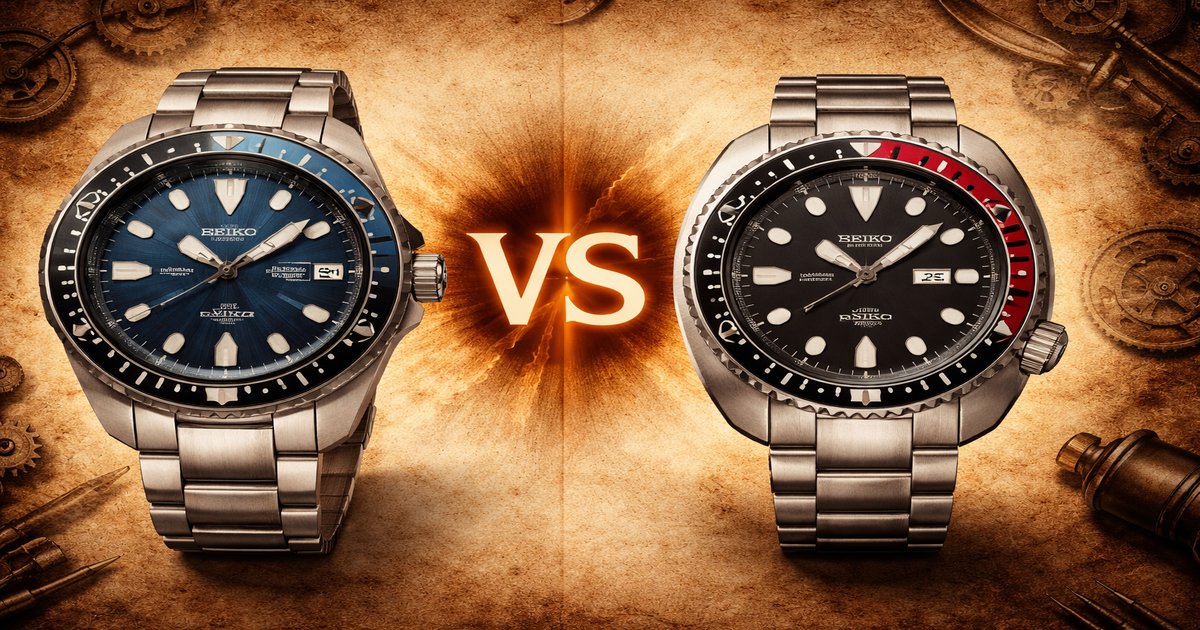
Choosing between the Seiko Samurai and the Seiko Turtle is like picking your fighter in a video game—both are heavyweights with their own unique strengths. Whether you’re a watch aficionado or just want a robust timepiece for your next adventure, making the right choice can be a game-changer for your wrist and your style.
| Feature | Seiko Samurai | Seiko Turtle |
|---|---|---|
| Case Diameter | 43.8 mm | 45 mm |
| Water Resistance | 200 meters | 200 meters |
| Movement | Caliber 4R35 | Caliber 4R36 |
| Luminosity | ✓ Lumibrite | ✓ Lumibrite |
| Case Material | Stainless Steel | Stainless Steel |
| Day/Date Display | ✗ | ✓ |
✅ samurai Pros
- Bold, angular design stands out.
- Slightly smaller case for more comfortable fit.
- Simple and reliable 4R35 movement.
❌ samurai Cons
- No day display, just the date.
- Limited color options.
✅ seiko turtle Pros
- Iconic cushion case design.
- Day/date function for added utility.
- More classic styling appeals to traditionalists.
❌ seiko turtle Cons
- Larger case might be too bulky for small wrists.
- 4R36 movement can be a bit finicky.
Build Quality and Durability
When it comes to build quality, both the Samurai and Turtle are tanks in the watch world, but they cater to slightly different tastes. The Samurai’s angular design feels like it could cut through air with its sharp lines and robust construction. It’s a watch that says ‘I mean business’. The Turtle, on the other hand, is a classic reimagined. Its cushion case is both iconic and comfortable, hugging the wrist with a snug fit that doesn’t scream for attention but commands respect. If you’re diving into the deep, both watches can handle the 200-meter plunge, but the choice here is about comfort versus flair.
Performance and Movement
The Samurai is powered by the Caliber 4R35, a workhorse movement that’s straightforward and gets the job done. It’s like a reliable friend who never lets you down. Meanwhile, the Turtle uses the Caliber 4R36, adding a day function that’s useful but can sometimes be less dependable, much like that friend who’s a bit of a wild card. If you value simplicity and consistency, the Samurai takes the cake. But if you need the extra function and can handle a bit of unpredictability, the Turtle is your go-to.
Style and Versatility
Styling is where personal preference really kicks in. The Samurai’s bold design is perfect for those who want their watch to be a statement piece. It’s not just a tool; it’s an accessory that elevates your look. The Turtle, however, is all about versatility. Its vintage charm and more subtle appearance make it suitable for both casual and formal settings. If you want a watch that’s ready for anything and doesn’t need to be the center of attention, the Turtle is your match.
Hidden limitations? Sure thing. The Samurai’s bold design might not play well in every setting—it’s not the watch for a black-tie event. And while the Turtle offers day/date, the added complexity means it’s another thing that can go wrong. Both watches are solid, but neither is a magic bullet for every scenario.
Our Final Verdict: Which One Should You Buy?
If you’re a style-forward individual who loves a bold statement with no fuss, the Seiko Samurai is your best bet. It’s for the modern adventurer who prefers a clean and reliable timepiece. On the flip side, if you appreciate classic designs with a hint of nostalgia and need that day/date function, the Seiko Turtle is your ideal companion. It’s perfect for someone who values tradition and utility in equal measure.
How does the fit differ between the Samurai and the Turtle?
The Samurai might fit better on smaller wrists due to its slightly smaller case size, while the Turtle’s cushion design can feel bulkier.
Are both watches equally durable for diving?
Yes, both the Samurai and Turtle are rated for 200 meters of water resistance, making them suitable for recreational diving.
Which watch offers better value for money?
Both offer excellent value, but the choice hinges on whether you prioritize a bold design (Samurai) or additional functionality with classic styling (Turtle).











Comments